
Santa Margherita, three dates between the door and the altar
The first date is outside. Two small busts and a monogram of Christ share the side doorway of Santa Margherita with the year 1512. The carvers probably came from nearby Cenova, a village of stonecutters. The other dates are indoors. One is cut into the stone supporting a vault. The other belongs to a painted bedroom, so high on the wall that you have to tip your head back to see it. In the space of a few steps you move from the work of the builders to the private affairs of a family from Borghetto.
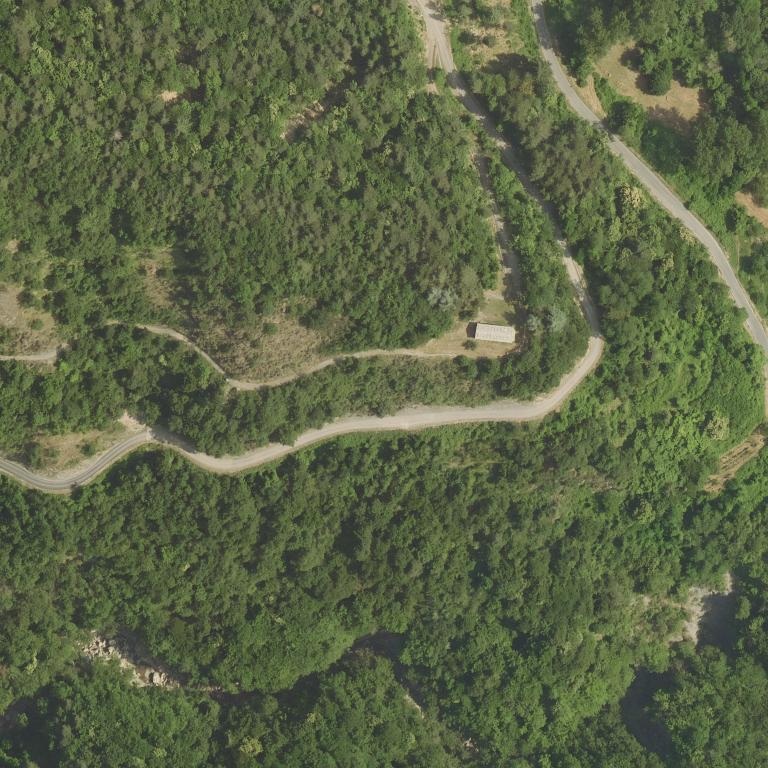
The church stands just south of Mendatica, on a wooded rise called delle Furche. Borghetto, the settlement it served, once consisted of several clusters of houses. The old village website preserved a local explanation for the choice of site. Each hamlet wanted a church of its own. Whatever one group built by day, a neighbour pulled down by night. At last the heads of the households agreed to put up one church together, equally far from everyone. That is how the local story accounts for the church’s position. The national heritage catalogue dates the surviving building to the late fifteenth or early sixteenth century. The destruction of the settlement is usually placed in 1625, during the war between Genoa and Savoy. Art historian Anna Marchini regards the date as probable.
Inside, the single nave ends in a little apse. Look to the right, where a block of black stone carries the vault. Cut into it is the year 1518. Around it the paintings tell the life of Margaret of Antioch. In the medieval legend told by Jacobus de Voragine, a dragon swallows the imprisoned saint. She makes her way out with a cross. Women called on her in childbirth. The story changes on the right wall and on the inside of the entrance wall. Here Jesus stands before Pilate and soldiers play dice for his clothes. At the Last Supper, pause over the bottles and drinking glasses. The painter set the table with things his neighbours would have recognised. The cycle is attributed to Pietro Guido of Ranzo.
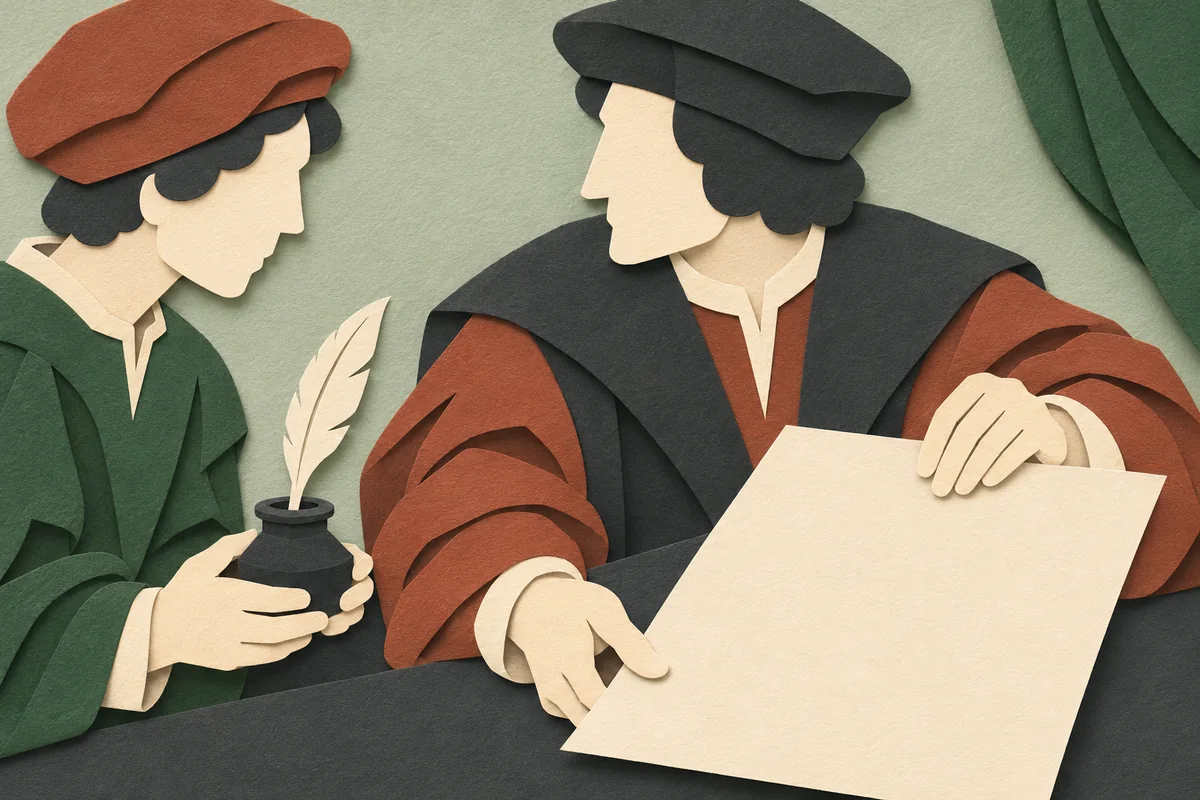
High on the arch across the first bay, the man in the picture has a local name. Filippo Aschero lies in bed. A woman offers him a spoon, a boy holds an inkwell and a notary turns his sheet of paper towards us. Aschero is leaving the income from a plot called Rovoira to pay for masses in perpetuity. The massari, the church wardens, will see to it. The inscription names Martino Lorenzi and Paolo Aschero as the men who had the bequest painted on the wall for everyone to see. Beneath it is the date 2 December 1531. As Marchini points out, that may be the day the picture was painted. The day the sick man dictated his will is unknown.
After Borghetto lost its houses, farmers, shepherds and travellers sheltered in the church. The heritage guide Città e Cattedrali records that Polish prisoners stayed here during the First World War while they widened the mule track below. The paintings overhead became legible again with the restoration of 1968–69.
Visiting the church
From the parking areas below Mendatica’s parish church, retrace about 200 metres along the provincial road to the hairpin with the walking signs. Take the level side road, pass the first path on the right to Case Pian del Lago, then take the next right for Santa Margherita. For the frescoes, arrange an opening with the Pro Loco on +39 338 3045512, also on WhatsApp. Città e Cattedrali lists 10 am to 6 pm from 3 April to 31 December and refers guided visits to the Pro Loco. A walker who surveyed the route in 2019 noted that the church was usually locked and visitors needed to ask for the key. Before continuing from the church towards the waterfalls, check the regional park’s notice of a temporary closure on that circuit.
Sources and visiting information
Elsewhere in the guide · Borghetto and its lost settlement · Poilarocca, further up the mule track
- Valley parishes, Santa Margherita del Borghetto
- National heritage catalogue, building record 0700111433
- Archived village website, the local foundation story
- Federico Manera on the hill and the Last Supper table
- Anna Marchini, Filippo Aschero’s bequest, with two close-up photographs
- Città e Cattedrali, painted scenes, history and booking
- L’Appenninista, approach from the village parking areas
- OpenStreetMap, the church on the rise
- Pro Loco visitor office and WhatsApp contact
- Regional park, waterfall circuit notice
Photographs and credits
Cover illustration by mendatica.com, made with ImageGen. An interpretation of the notary and his assistant in the painted bequest described by Anna Marchini.
Santa Margherita on the Borghetto ridge, its pale roof above a bend in the road. AGEA orthophotography, Liguria survey of 2022, north up. Nine tiles joined as a JPEG with no overlays. Survey record and licence · Central AGEA tile · CC BY 4.0.