
Santi Nazario e Celso, the bell that called the builders
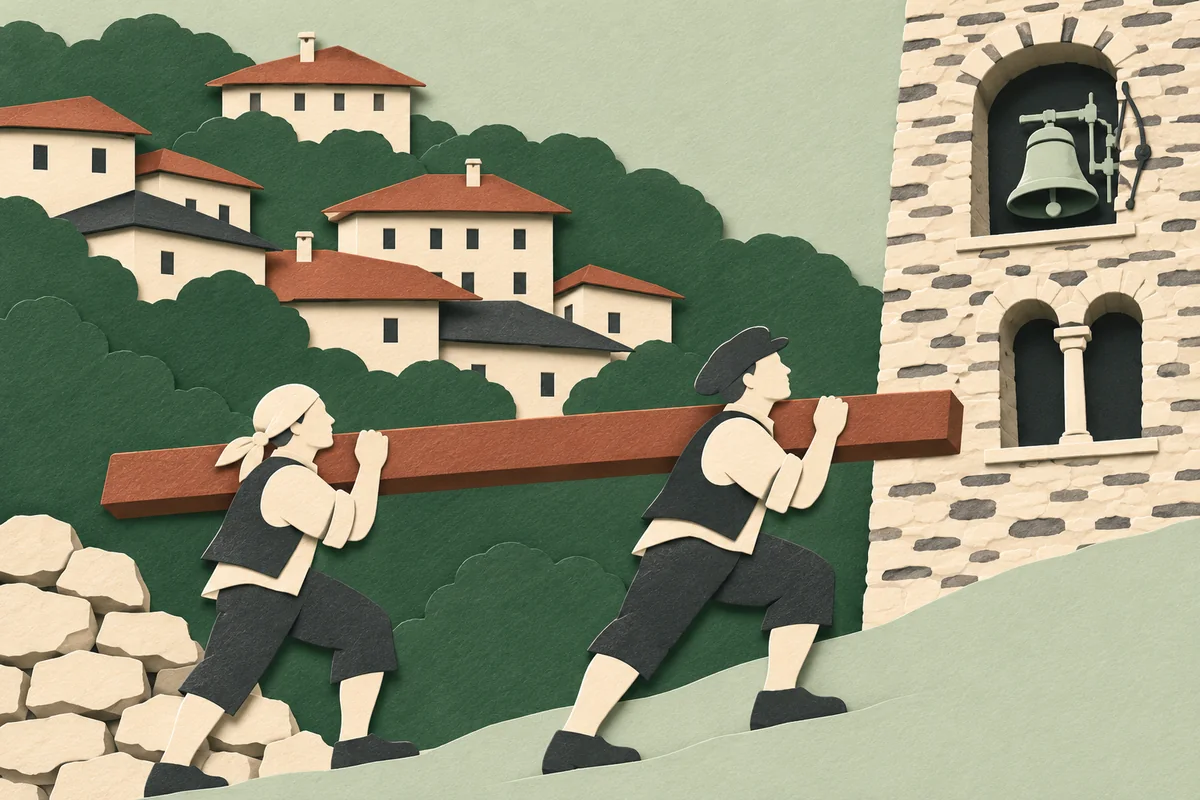
When the builders of Mendatica’s parish church ran short of stone or timber, someone rang the bells. Villagers brought what they could. In the parish account of the rebuilding, the medieval tower went on doing its job while the old church was taken down around it. From Piazza Roma you can pick it out to the right of the façade. Below the belfry are paired openings, each divided by a slender column. The octagonal spire belongs to the later rebuilding.
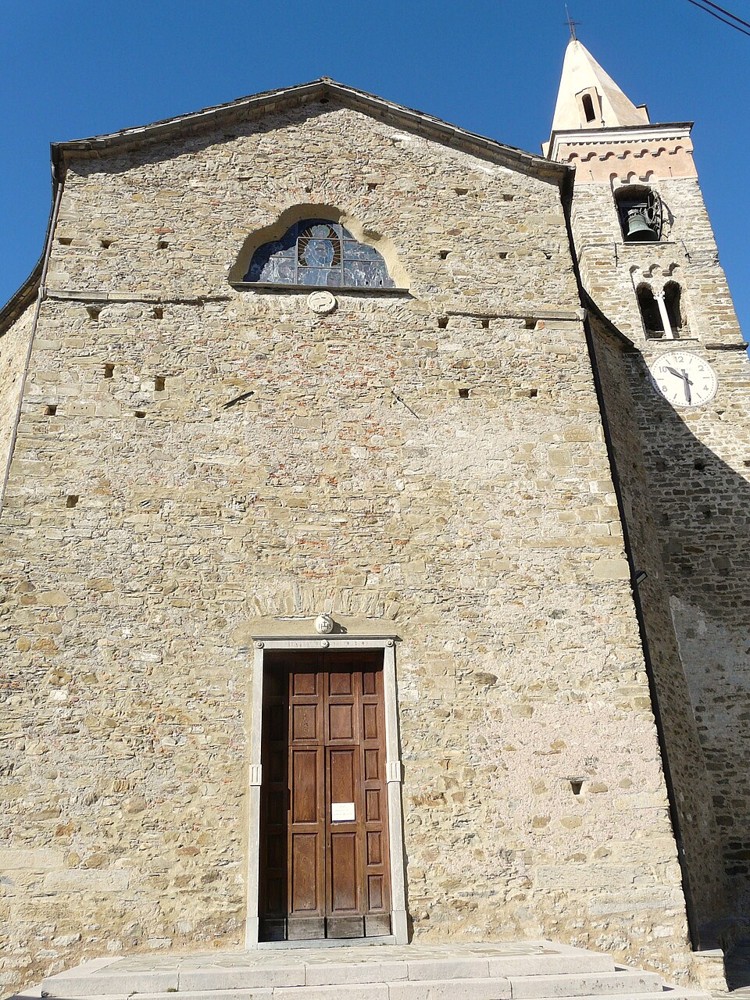
As you climb the steps you cross the spot where the apse of the medieval church used to stand. Its entrance was at the opposite end, where the choir is today. Below the large window in the façade is a small relief salvaged from the earlier building. It shows a lamb carrying a banner. Enrico Cannoletta, drawing on local research, records what villagers call it, l’agnello di San Giovanni, Saint John’s lamb. The diocese traces the first consecration, on 16 July 1380, to a notarial record made in 1389. A bishop returned to consecrate the enlarged church in the next century. The diocesan inventory names Cornelio di Claramonte and gives 4 January 1451. The parish’s shorter history gives 1454.
In 1760 the parish priest, Giuseppe Maria Gastaldi, brought a question of space before the heads of the village households. The medieval nave and its two aisles could no longer accommodate the growing population. Only one vote went against rebuilding. In Emidia Lantrua’s account, the local lords undertook to pay the skilled tradesmen, and ironwork was to come from foundries in Finale Ligure. Domenico Belmonte of Gazzelli took on the design and construction. The diocesan inventory dates the laying of the foundation stone to 5 September 1760 and the opening to 21 November 1764. A second chronology survives in the parish’s general history, which dates the start of work to 1766.
From the plain stone façade you step into a Baroque church with a single nave. Where the space opens out, look up at the cornice running above the gilded capitals at the base of the dome. The village confraternities each cared for an altar in the side chapels. Overhead, four scenes trace the patrons’ lives from the meeting of the boy Celsus with Nazarius through their martyrdom and glorification. The old baptismal font stands to the left of the entrance. A stone tabernacle attributed to the carvers of nearby Cenova is set into the right wall of the sanctuary. Even after the church had been turned end for end, children were still baptised at the same font.
One painting came down to the village from the high pastures. Ask about Giacomo Rodi’s Madonna della Neve, Our Lady of the Snows, painted for the chapel at Poilarocca, a summer herding settlement high above Mendatica. Drawing on the memories of Giovanni Battista Sibilla and his son Fabrizio, Corrado Agnese tells how the painted devil frightened people enough to become a village byword. The picture was given to the parish on 28 July 1953, the feast of the two patrons. It brings something of that abandoned mountain settlement into the church on Piazza Roma.
The steps and façade are visible from the square. The valley parishes publish a weekly service calendar. For a visit to see the artworks outside worship, or to ask about step-free access, contact the Mendatica parish.
Sources and visiting information
Elsewhere in the guide · Poilarocca, where the Madonna painting came from · Santa Caterina and its confraternity
- Diocesan inventory no. 21007, consecrations and building dates
- Emidia Lantrua on the rebuilding and the saints in the vault
- Parish history, bells and surviving furnishings
- Enrico Cannoletta on the medieval lamb relief
- Corrado Agnese on the painting and the devil of Poilarocca
- OpenStreetMap, the parish church on Piazza Roma
- Valley parishes, weekly service calendar
- Mendatica parish contact details
Photographs and credits
Cover illustration by mendatica.com, made with ImageGen. An interpretation of the parish account of villagers bringing timber. The tower openings are adapted from Davide Papalini’s 2010 photograph. The cover is distributed under the same licence. Davide Papalini, Wikimedia Commons · CC BY-SA 3.0.

The façade and bell tower of Santi Nazario e Celso from Piazza Roma. Davide Papalini, 6 March 2010. Full frame, resized and distributed under the original licence. Original photograph on Wikimedia Commons · CC BY-SA 3.0.