Valcona Soprana, where a new baby meant another terrace of potatoes
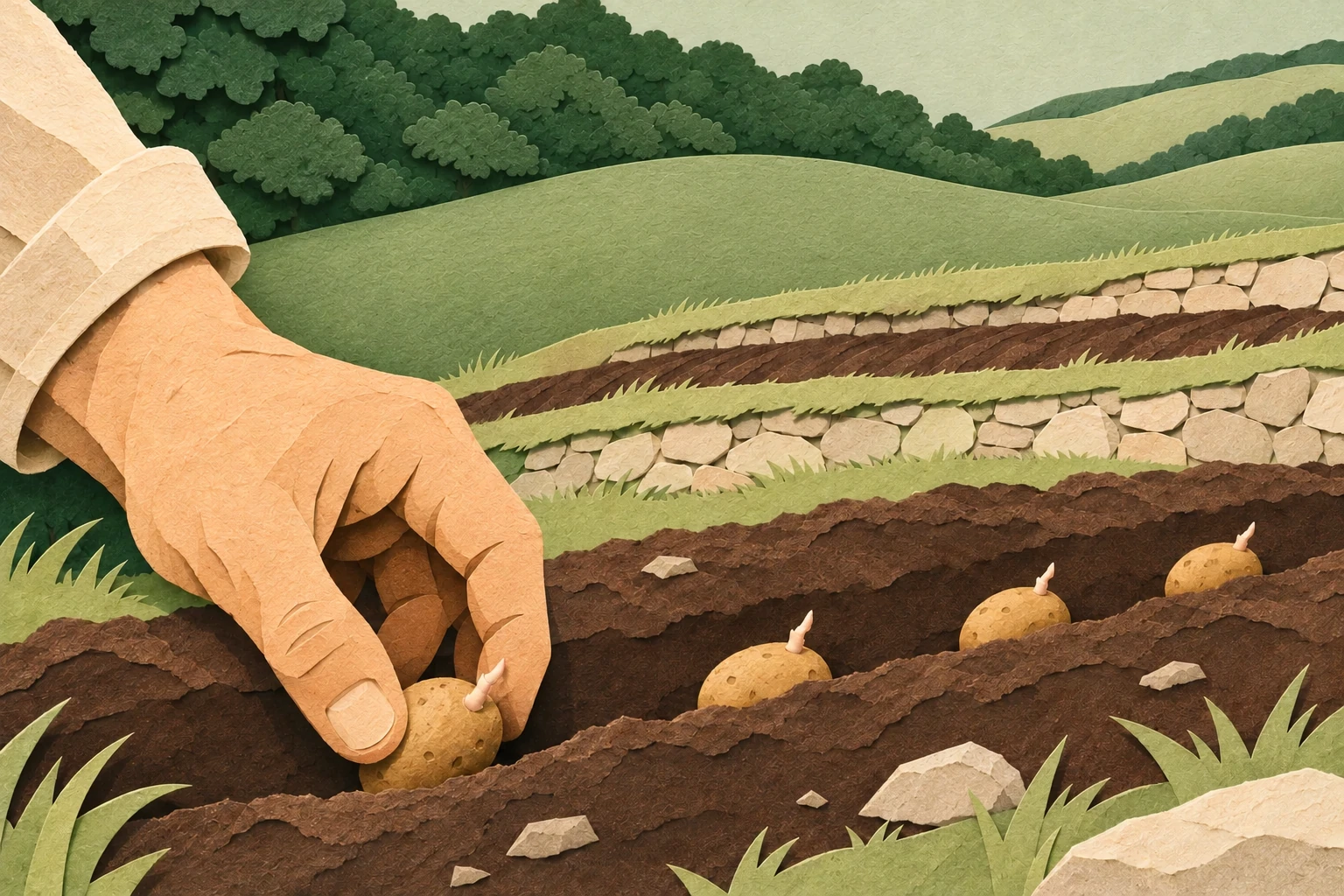
There was a way of announcing a baby in the mountains around Mendatica. Cianteremu ina fascia de patate in ciù, the family might say. “We’ll plant one more terrace of potatoes.” Federico Manera recorded the saying for the village association in his account of Valcona Soprana. To see what a fascia meant to a family, look at the ground just beyond the houses. Each terrace gave them a strip of level earth on a steep hillside.
A map of the valley drawn in 1736 gives a single name, Valcona. Today Soprana is the upper of two hamlets that share that name, on the Tanarello side of the Ligurian Alps. It stands at 1,410 metres. Valcona Sottana lies below it at 1,235. Children once made the journey between them on school days. In the summers of 1958 and 1959, those staying with their families on the upper pastures went down to join Ginita Bruno’s class in the lower hamlet.
Berries after the lowland harvest
People used to come up to Soprana to buy tiny woodland strawberries. The Ligurian weekly Trucioli remembers the spot, and the square behind the parish church down in Mendatica where the berry fair was held. People picked raspberries, bilberries and blackberries here. The raspberries and bilberries at the early fairs are remembered as wild fruit. The little strawberries had a grower. According to a later account in the same paper, a farm in Soprana raised them for some twenty years.
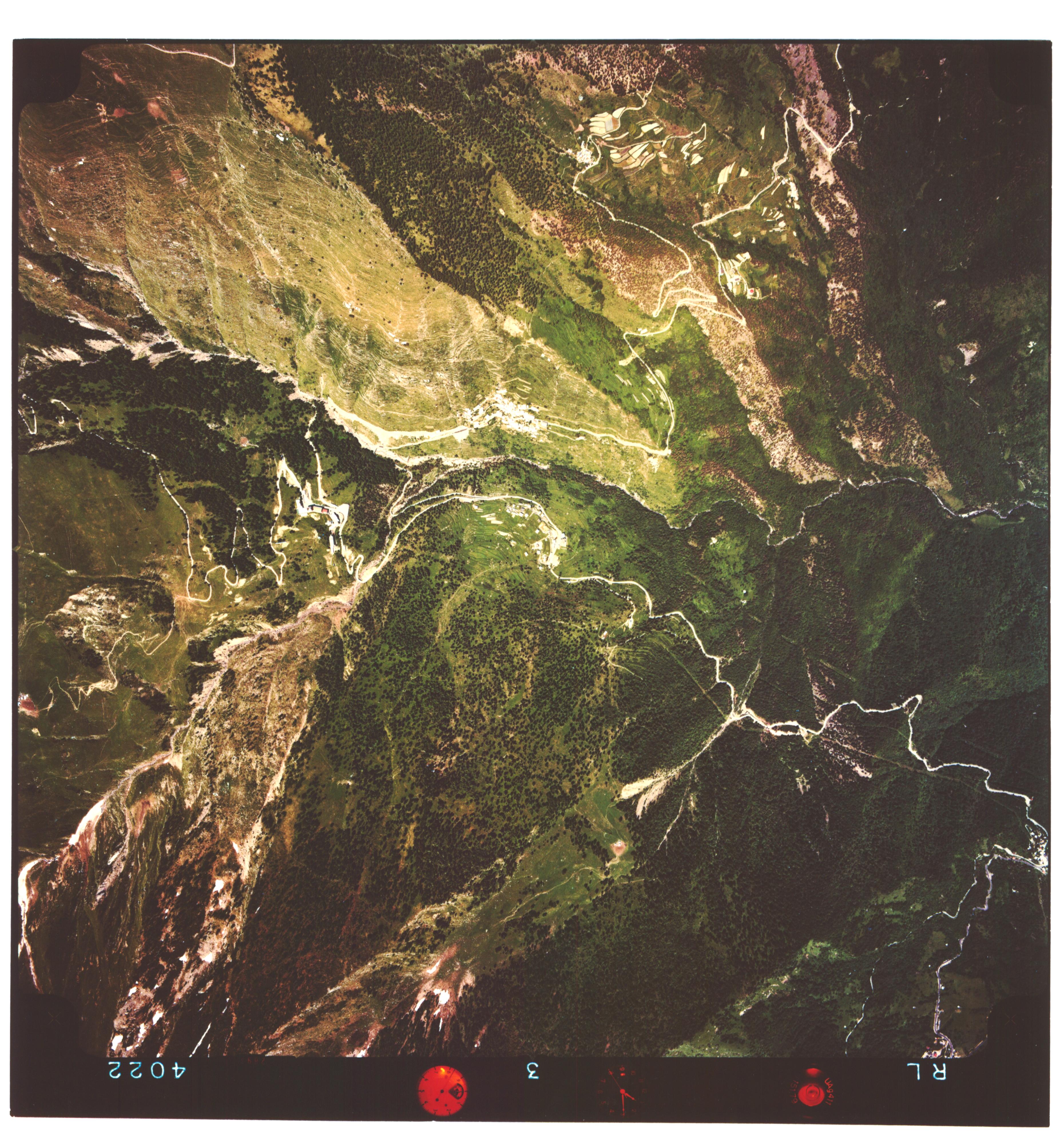
In an aerial photograph from the 1973–74 survey you can see the fields bend round the hamlet. Some run in narrow, curved strips along the slope. Others spread out on ground where the farmers could use machinery. Growing berries at this height had an unexpected advantage. By the time the fruit was ripe, the growers down on the Piedmont plain had finished their harvest. Manera recalls how well the Soprana farms did out of that late season in the 1970s. A cultural association in Ventimiglia also recorded that Mendatica’s berries were sold further afield, though it didn’t name the markets they went to.
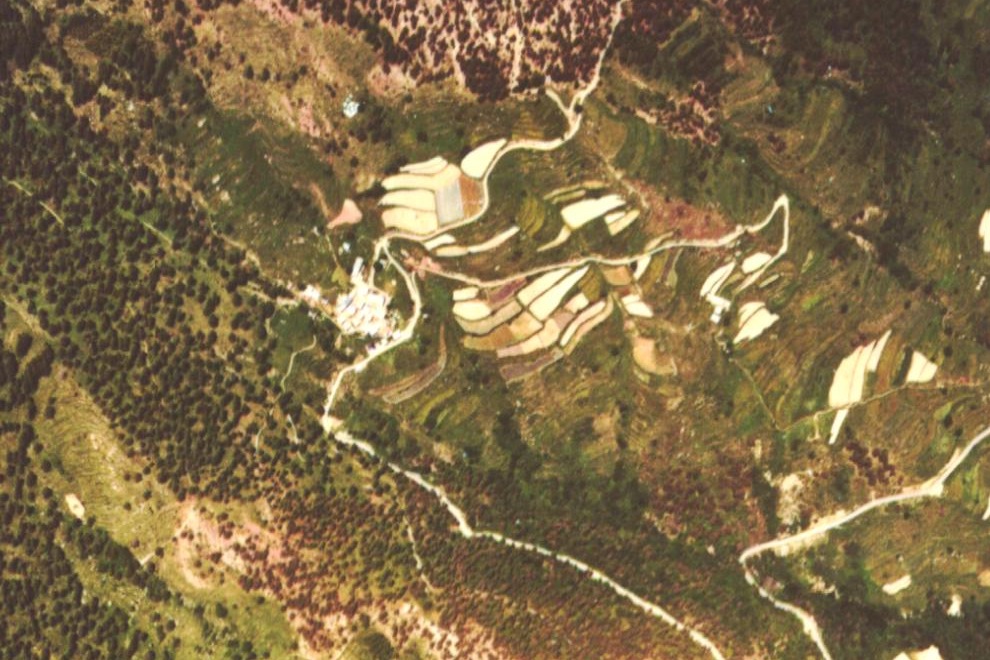
A machine could help work the land, but every berry still had to be picked by hand. In Manera’s account it was the cost of picking that eventually put the growers out of business. In 2018 Trucioli named Piero Pelassa’s family among the Mendatica families still farming in the two Valconas, where wheat and potatoes were grown. Writing about Soprana in 2024, Manera described the terraces nearest the houses as vegetable plots, mostly planted with potatoes. There were cabbages too, much to the delight of the local roe deer.
Up the steps to the chapel
A good way to visit both Valconas is to walk up from Sottana. Pick up the old stone-paved path on the uphill side of the road. It climbs to Pigheugia, where you turn left at the white wayside shrine. A level stretch brings you to Soprana. The park allows about half an hour between the two hamlets. A few steps along the road, a stepped lane leads up to the chapel.
In Mendatica a malga was a settlement where families lived for the grazing season. A family’s house there was a teccio. The lane takes you among low stone houses, several of them restored, to the chapel the herders built in honour of San Bernardo. When reporter Davide Avena walked these lanes in October 2022 there was grass underfoot. He stopped at the little church and the war memorial. The parish gives 20 August as the traditional date for the saint’s feast here in the upper village.
Pierina Pelassa, a shepherd from Mendatica, kept a notebook that helps explain the houses you see today. German troops set fire to both Valconas on 31 March 1945. At first light on Easter Sunday the families set off from Mendatica to see which of their houses they could save. They could see the smoke from the San Bernardo pass. The flocks soon came back. In 1946–47 Pierina counted four in the upper village and six in the lower one.
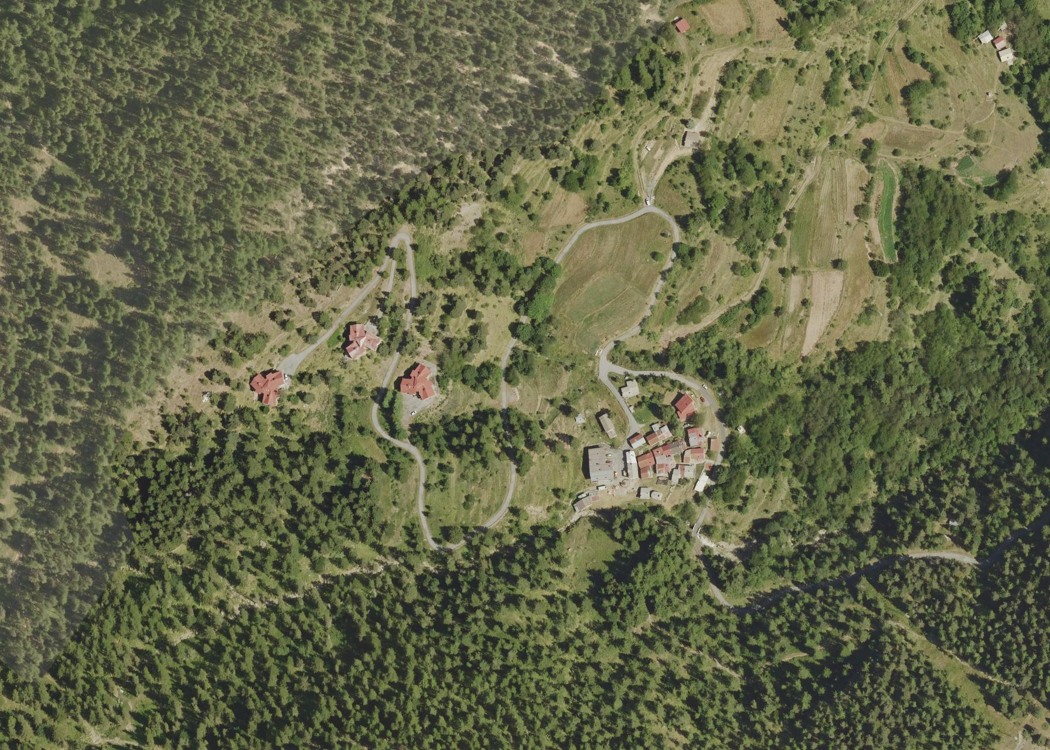
Further up, apartment buildings stand apart from one another. They date from the years when the nearby Monesi ski resort was expected to expand. From below you can still pick out the edge of the old settlement. In the pastures higher up, Manera traces the old Via Marenca. A forest track from the last houses leads towards Margheria Binda. At around 1,550 metres the regional environmental agency surveyed a grazed clearing there, with wild rose bushes spreading in from the larches.
Bread at Ivo and Francesca’s
On his visit in 2022 Avena saw fruit trees laden with their crop around the site of a future walkers’ stop. The old teccio there was taken down and a new building went up on its footprint. The opening ceremony took place on 30 June 2024. The kitchen opened two summers later. In mid-July 2026 Ivo Senarega and his wife Francesca welcomed their first customers to the Rifugio Valcona Soprana 1445. That August, reporter Alberto Ponte described the bread they served, made with partly refined flour and u levau, a piece of fermented dough kept to raise the next batch.
If you’re driving from Mendatica, the approach is by the San Bernardo pass, Monesi and Piaggia, where you take the turn for Soprana. Check the refuge’s opening days before making a lunch trip. If you plan to continue towards Le Salse, a winter order effective from 9 November 2026 closes the SP 154 between Rio Giairello and Le Salse to vehicles until further notice.
Sources and visitor information
- Planning a visit · Map of the upper hamlet · The path between the two Valconas · The parish on the chapel of San Bernardo · Mendatica visitor office · Provincial road notices · November 2026 winter road order
- What grew here · Federico Manera for the local association · Buying strawberries in the upper hamlet · The Pelassa family and farming in the two Valconas · Wild fruit at the early fairs · The strawberry farm, in the Mendatica caption · Cumpagnia d’i Ventemigliusi on woodland produce
- People and places · Ginita Bruno’s summer school, pp. 63–65 · Pierina Pelassa’s notebook · Davide Avena’s filmed walk through Soprana · The regional survey of the clearing · The 1736 map, fig. 3b · ISTAT’s 2021 locality records
-
The refuge · Regione Liguria on rebuilding the teccio · Alberto Ponte on Ivo and Francesca’s first summer
-
Explore further · Pigoggia and the children between the two Valconas · Margheria Binda, a clearing above Valcona
Photographs and credits
One more terrace to plant, from the local saying recorded by Federico Manera. Opening illustration in cut paper, made with ImageGen for mendatica.com. Federico Manera, Valcona Soprana.
- The fields beside the houses, 1973–74. © Regione Liguria, regional aerial photographic archive, flight 1, strip 003 OVEST, frame 4022. Cropped from the colour photograph, with the original orientation. Full frame · Regional CC BY terms
- Valcona Soprana from the air, 2022. © AGEA, the Italian agricultural payments agency. Tiles from the 2022 aerial survey joined and resized, north at the top. Survey record · CC BY 4.0