La Brigue and the Brigasca country, through the doors of an old hospital
In a courtyard in La Brigue stands a replica of the bread oven from Morignole, the village a little farther up the valley. To find it, look for the old hospital near place de Nice. Since May 2000 the building has housed the Maison du Patrimoine et des Traditions Brigasques. A few rooms take you from a beehive made out of a tree trunk to a family kitchen. Upstairs there is even a seventeenth-century Italian organ small enough to carry. The courtyard, the chapel and the hospital belonged to a foundation whose benefactor had given some thought to what the people of these valleys might need after his death.
Abbot Giacomo Spinelli made his will on 18 March 1706. Among other things his foundation was to pay for the upkeep of Saint-Michel chapel, help support the hospice and provide dowries for poor girls of the Spinelli family. The octagonal chapel still stands beside the former hospital. Two and a half centuries later, a Franco-Italian arbitration panel met in Sanremo to decide who should receive the income. By then the villages the charity served lay on either side of the French–Italian border.
The value of one eighth
La Brigue is a French municipality in the Alpes-Maritimes, on the Levenza, a tributary of the Roya. Until 1947 it was the seat of the Italian municipality of Briga Marittima. The peace treaty came into force on 15 September that year. The main village and Morignole passed to France. Piaggia, Upega and Carnino remained in Italy and formed Briga Alta in Piedmont. Realdo joined Triora in Liguria. The vote on the French side followed on 12 October, several weeks after the treaty had taken effect.
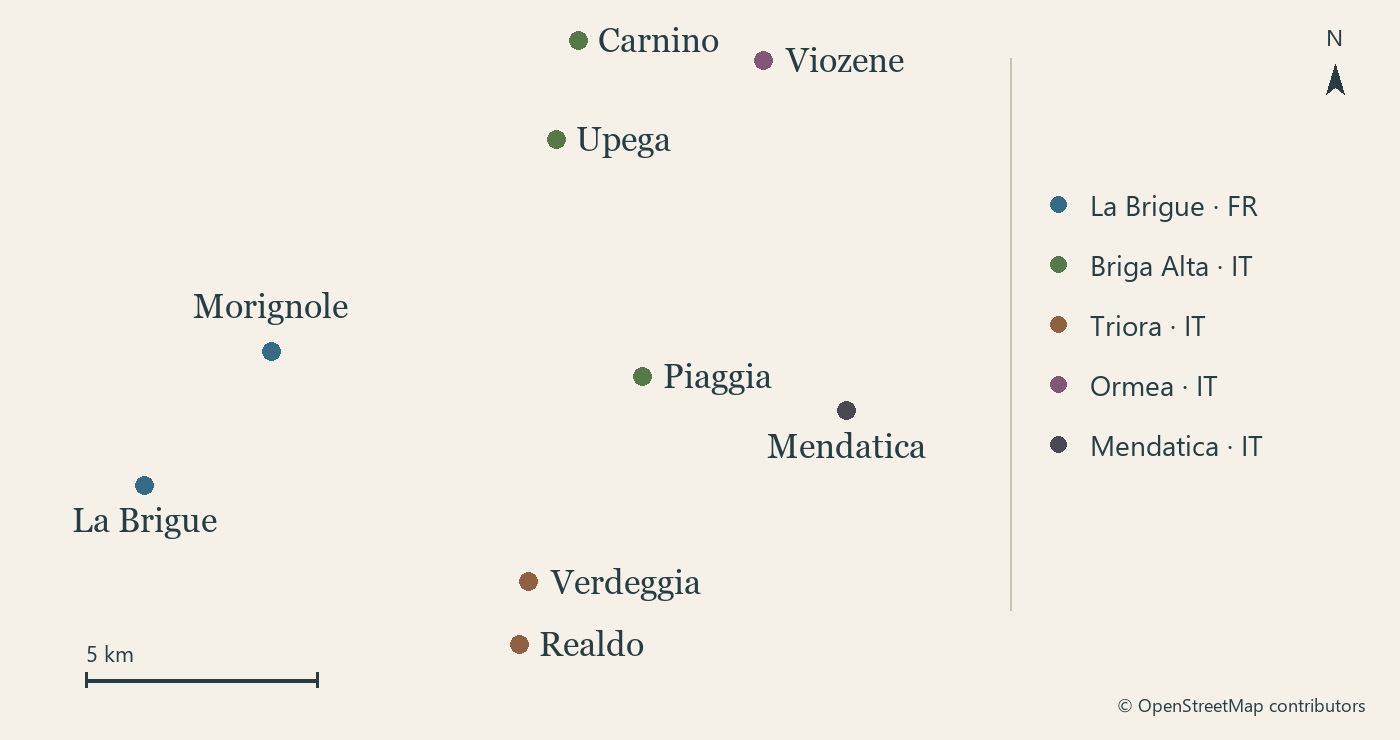
On 4 October 1960 the arbitrators kept the Spinelli foundation intact and divided the income. After expenses, one eighth went to the welfare authority of Briga Alta and one eighth to the hospital in Triora. The rest was shared equally between the hospice and the dowries specified by the abbot. Someone who had stayed in Realdo or Piaggia could still benefit from a bequest now administered abroad. The association that brings the villages together today takes its name, A Vaštéra, from the Brigasque word for a sheepfold. Each village hosts the others in turn. Its cultural map also includes Verdeggia and Viozene, eight centres altogether. At the annual gathering, the Ëncontr, part of the Mass is said in Brigasque.
From a carved lintel to the cheesemaker’s kitchen
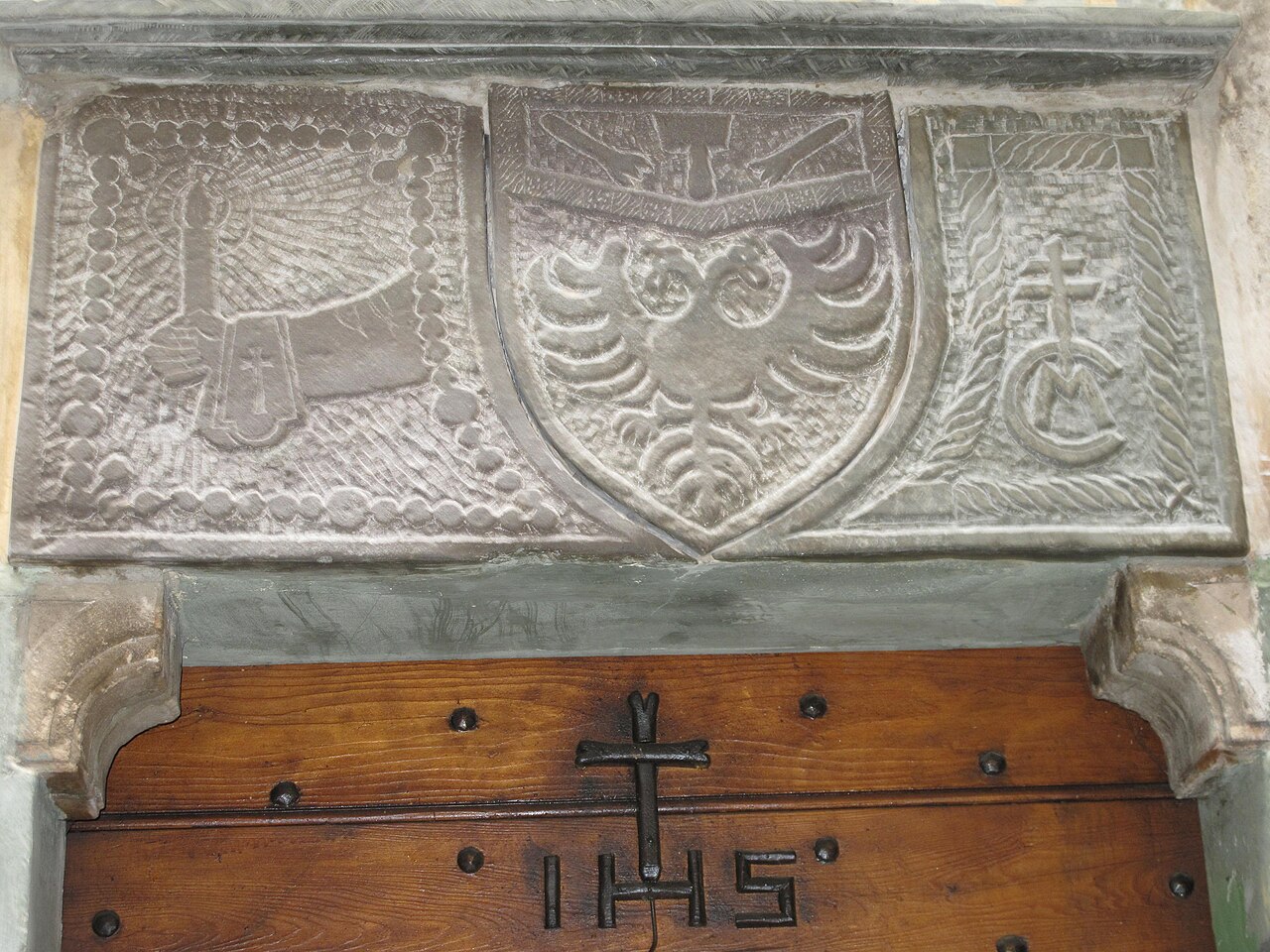
A walk to the museum can begin on place Saint-Martin. Over the collegiate church door, Saint Martin divides his cloak with a poor man. Keep looking just above the doors as you go on through the village. Emblems and figures are carved into the dark stone lintels. At 16 rue du Lieutenant-Ralck you can make out the two heads of the Lascaris eagle. Rue Filippi leads up from the village to what remains of the family’s castle. For the museum, turn back towards place de Nice.
The beekeeping rooms explain the curved stone walls found around La Brigue. A cà d’arbinée was an enclosure for hives, often turned towards the midday sun. The museum has reconstructed one. Among the older types of hive is the brusc, made from a hollowed tree trunk. In the reconstructed kitchen, sheep’s cheese and brous, a dairy product that grew strong enough to use as a seasoning, lead back to the shepherds who moved between these valleys.
Across the mountains, the Liguria region recorded how the Il Castagno farm at Mendatica worked with the same local breed of sheep, the Brigasca. To make toma, the cheesemaker gathers the curds in a coarse cloth called a raireura, folds it over and weights it with a stone for about twelve hours. The cheese in the museum kitchen and that movement of the hands in the Arroscia valley help place Mendatica in the story. It was a neighbouring municipality whose pastures supported related ways of working. The former hamlets of Briga Marittima that changed jurisdiction in 1947 can be traced individually on the map.
To see the dress and faces of the late fifteenth century in paint, continue east out of the village on the RD43 to Notre-Dame-des-Fontaines. In the nave Giovanni Canavesio painted the Passion of Christ, completed in 1492. The La Brigue tourist office takes bookings for visits outside the summer season.
Coming up the Roya valley
For a visit from Mendatica, plan the approach through the Roya valley. At Saint-Dalmas-de-Tende turn off the RD6204 onto the RD43 for the village. La Brigue also has a railway halt on the line between Breil and Tende. Check TER for departures on your travel date. The village centre is at 44.06186° N, 7.61589° E. The tourist office lists the museum at 26 avenue du Général-de-Gaulle.
When checked on 23 November 2026, the museum’s last advertised regular opening period had ended on 1 November. The Vermenagna–Roya heritage project lists winter visits for groups by reservation. Contact the Maison before travelling for a winter visit indoors. The lanes between the collegiate church, the Lascaris lintel and the abbot’s chapel make a walk in their own right.
Sources and visitor information
- Franco-Italian Conciliation Commission, Decision 277 on charitable foundations, pp. 187–192
- French diplomatic archives, records of the vote on 12 October 1947
- Upega Pro Loco and A Vaštéra on the eight Brigasque villages and the annual gathering
- Vermenagna–Roya, the former municipality and the village walk
- Vermenagna–Roya, the Spinelli hospital and museum
- La Brigue municipality on the church, lintels, castle and apiaries
- Liguria region on the flock and cheesemaking at Il Castagno
- Tourist office, museum collections, calendar and contact details
- Notre-Dame-des-Fontaines, advance booking · The route along the RD43
- TER, La Brigue railway halt · Station access, Provence-Alpes-Côte d’Azur Tourisme
- La Brigue on the map
- Piaggia, seat of Briga Alta · The two Carnino settlements
- Source notes
Photographs and credits
Map of the eight settlements of the Tèra Brigašca as identified by A Vaštéra. Mendatica is shown to the east for reference. Drawn by mendatica.com, 23 November 2026. Colours indicate present-day municipalities. A single point represents both Carnino settlements. Positions from © OpenStreetMap contributors, ODbL 1.0 data. Sources and map points · Attribution and licence
Lascaris eagle on the lintel at 16 rue du Lieutenant-Ralck, La Brigue. Photograph by Tangopaso, 30 March 2011, released into the public domain by the photographer. Full frame, resized to 1,280 × 960 pixels. Original and photographer’s declaration

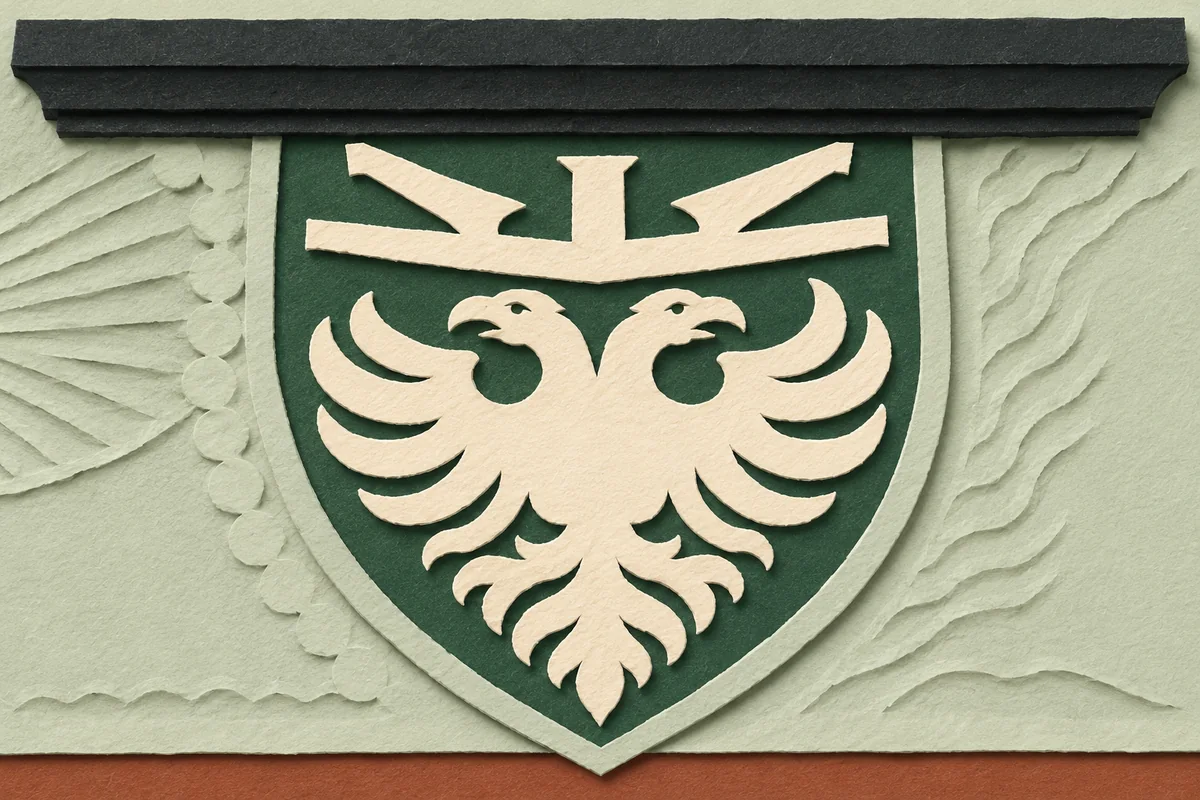
Cover. The lintel at 16 rue du Lieutenant-Ralck. Cut-paper interpretation made with ImageGen from Tangopaso’s photograph, 30 March 2011, released into the public domain. Illustration by mendatica.com, CC BY 4.0.