Triora and the loaf that took the bus to Sanremo
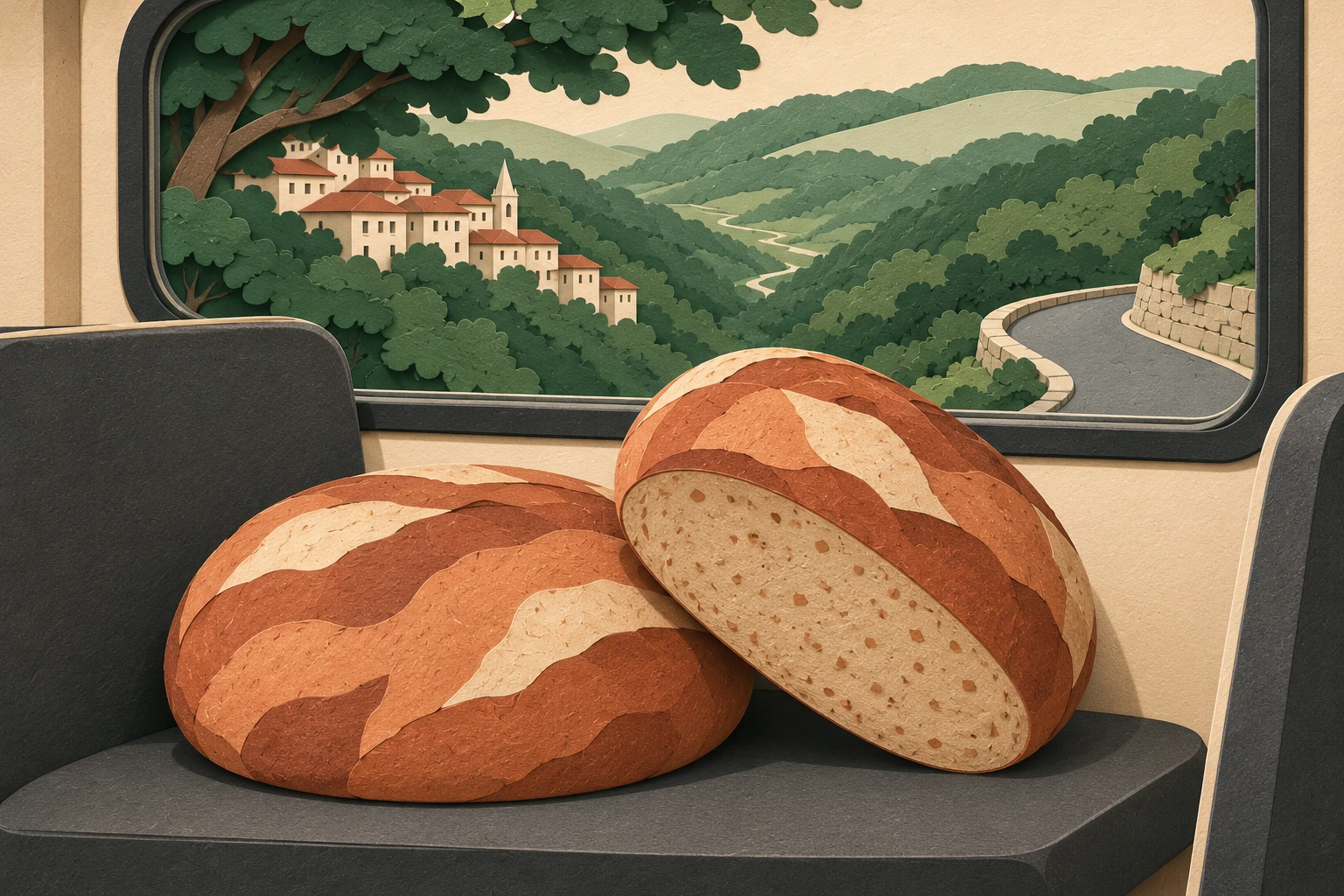
For a time, the scheduled bus from Triora to Sanremo carried bread as well as passengers. The Asplanato family, who bake it, tell the story. After the war Angiolino revived a recipe passed down by word of mouth for a loaf that would keep at home for days. Shopkeepers on the coast wanted to sell it, and the bus provided a way down the valley. Turn over one of the round loaves today and you can still see the bran the baker rests it on before it goes into the oven.
To follow the bread’s journey in reverse, leave the coast at Arma di Taggia, head up the Argentina valley and climb beyond Molini di Triora to the town, about 780 metres above sea level. Mendatica is across the mountains. On Corso Italia, the Museo Regionale Etnografico e della Stregoneria keeps a record of the work that went into a loaf. A sequence of photographs shows Giacumin Lanteri hammering the edge of his scythe on a little anvil. Out in the fields he carried a cueta, a whetstone, in a case on his belt so he could touch up the blade without going home. Beside the reconstructed oven mouth is the long wooden peel a baker needed to reach the back. Triora once had three public ovens. On Good Friday the Confraternity of the Good Death distributed a special two-headed loaf flavoured with fennel seed.
A girl in the collegiate church
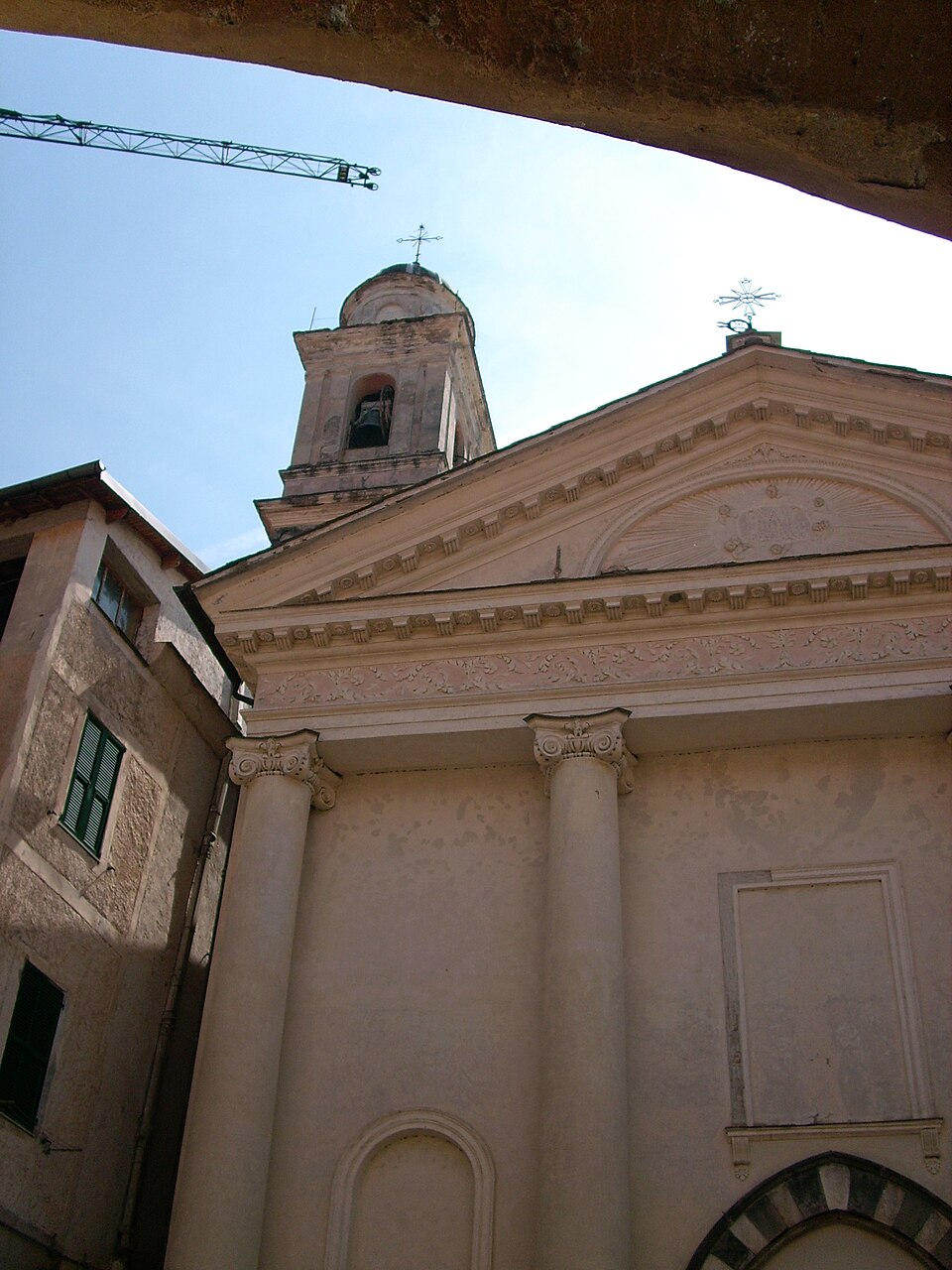
From Corso Italia the carruggi, narrow lanes that sometimes run under the houses, lead into the daylight of the square beside the Collegiata dell’Assunta. In its baptistery hangs a panel of Christ in the Jordan, signed in 1397 by the Sienese painter Taddeo di Bartolo. Nearly two centuries later, on 3 May 1588, a thirteen-year-old girl stood in this church during Mass and was made to recant. She had just been released from prison.
Accusations of witchcraft had been spreading since the previous autumn. On 13 January the town elders, who represented its wealthier families, wrote to Genoa protesting at arrests based on accusations extracted under torture. By 20 January, after several noblewomen had been spared arrest, the elders were writing in a more conciliatory tone. The interrogations continued into September. In the record of her questioning on 19 September, Franchetta Borrello explains that she had been feverish when she made an earlier statement. At one point she says she is clenching her teeth and that afterwards they will say she was laughing. Even that observation comes down to us through the pen of someone on the other side of the interrogation.
The nineteenth-century cells in the Corso Italia museum hold copies of the proceedings. The originals are in the State Archives in Genoa. From the church square you can walk on to the Cabotina, where witches were said to meet in the tradition recounted by the town of Triora. From its lookout you can pick out Molini, Corte and Andagna. Several of the women put on trial came from Andagna. Once you have read their names, the view gives you a sense of how close these neighbours lived.
Visiting Triora
Riviera Trasporti route 16 serves Triora via Taggia railway station. Check both outward and return journeys on the Triora row for your day of travel, as other services run to Carpasio. By road the valley approach is via Badalucco and Molini. As of 23 November 2026 a winter closure affects part of the SP17 between Rezzo and Andagna, relevant if you are coming from the Arroscia valley. Explore the old town on foot, over stone paving and steps. For the farming collection and the trial papers, ask for the museum at Corso Italia 1. Palazzo Stella, beside the collegiate church, is a separate museum with its own programme.
Further up the valley, the road through Loreto and Creppo reaches Realdo. The threshing machine and winnower in Triora’s grain room came from the area around that village, where kitchen gardens reach the very edge of the cliff.
Sources and visitor information
- The Asplanato bakery’s family account · Giacumin Lanteri, tools and loaves in the grain room
- The town elders’ letters and the recantation on 3 May · Franchetta Borrello’s interrogation, 19 September 1588 · Where the trial records are kept
- The painted panel in the collegiate church · The view from the Cabotina · Corso Italia museum, rooms and contact details · Palazzo Stella
-
Triora on the map · Riviera Trasporti route 16, winter 2026–27 timetable, p. 1 · Provincial winter road order · Realdo · Sources and documents
-
Explore further · Monesi di Triora, where the chairlift began
Photographs and credits
Bread on the bus. Cut-paper illustration made with ImageGen for mendatica.com, inspired by the Asplanato family’s account. The arrangement on the seat and the view through the window are imagined. The bakery’s account.
Collegiata di Nostra Signora Assunta, Triora. Davide Papalini, 25 April 2007. Looking up from the square towards the façade and bell tower. Wikimedia Commons version resized to 960 × 1280 pixels, with the full frame retained. Photograph record · CC BY-SA 3.0
